Full-body incline
One continuous planeThe whole sleep surface tilts. Your mattress stays straight from head to foot, without a hinge at the hips.

Incline Sleep 101 · The essentials
Better sleep starts with understanding your options. Discover what full-body incline means, why people explore it, and how to find a setup that fits your life.
Your guide to a more considered night’s rest.
Illustrative geometry, not a prescribed sleep setting.
Example: a 5-inch rise across an 80-inch sleep surface is approximately 3.6°. An illustration, not a prescribed setting.
01 / A simple but powerful idea
Inclined sleeping raises the head end of your sleep surface above the foot end. The idea is simple: change your position relative to gravity while keeping your body supported.
Full-body tilt and an adjustable head section work differently. Knowing the difference helps you ask the right questions.
Illustrative mechanics on an 80-inch sleep surface. These controls do not prescribe a sleep position.
The movement tells the story
The entire sleep surface rotates together. Your head is higher than your feet, while the mattress remains in one continuous plane.
Does the whole platform tilt, or does only the head section lift?
Choose a movement, then adjust the slider to see what changes.
The whole sleep surface tilts. Your mattress stays straight from head to foot, without a hinge at the hips.
The upper section bends upward while the lower section stays level. Useful for positioning, with a different feel from whole-bed tilt.
“Adjustable” does not automatically mean full-body tilt. If a continuous incline is your goal, ask specifically whether the entire bed tilts as one plane. Check the current model’s specifications before buying.
02 / Why people explore incline
People arrive here with different goals: less nighttime reflux, a quieter night, or a more comfortable position. Start with what is known, and keep your own needs in the conversation.
Head elevation may help reduce nighttime reflux symptoms for some adults. It is one lifestyle approach to discuss as part of your GERD care plan.
Guidance from NIDDKSome people explore a different sleep position for quieter, more comfortable nights. Persistent snoring or suspected sleep apnea calls for a proper evaluation.
Position matters · results varyA continuous sleep surface offers an alternative to a bent, seated position. The right mattress, pillow, and support remain essential to personal comfort.
Personal fit comes firstCirculation, sinus drainage, lymphatic flow, and recovery are common questions. Evidence varies; full-body incline is not an established “detox” or healing treatment.
Keep expectations groundedFor adults. Educational information, not individual medical advice. An incline does not replace prescribed care or sleep apnea treatment. Reflux guidance · Sleep apnea guidance.
03 / Four ways to explore your options
Keep your mattress, choose a fixed foundation, or explore adjustable positioning. Compare how each option works before choosing what belongs in your bedroom.
Your next step, made clearer
Choose an option to see a starting point and highlight the matching product below.
Understand how the setup works, what it supports, and what to ask before buying.
Read the getting started guide
A fixed foam incline that fits beneath your existing mattress, with no motor or remote.

A tilt-only adjustable foundation that raises the sleep surface as one continuous plane.

A foundation designed around a permanent incline, for sleepers who prefer a simple fixed setup.
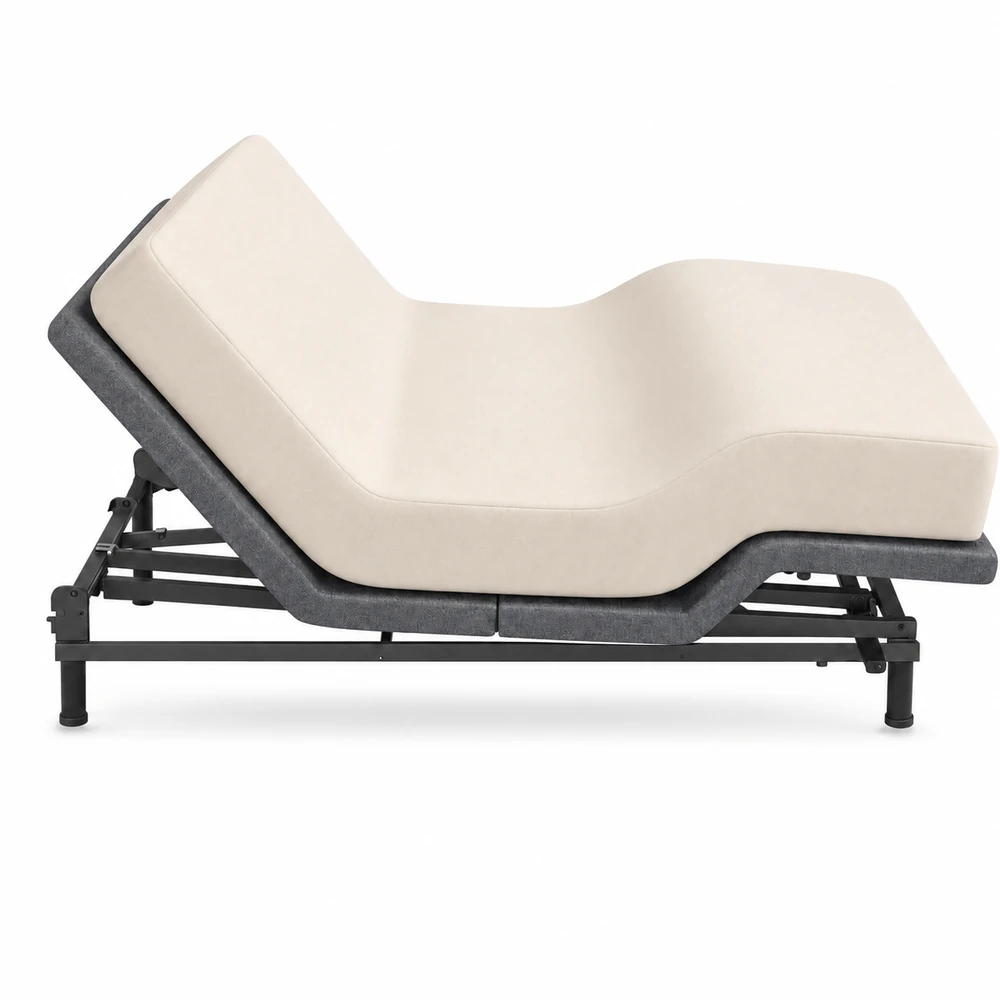
An adjustable base offering head and foot positioning for a more customizable resting setup.
| Option | How it works | A reason to consider it | Confirm before ordering |
|---|---|---|---|
| Foam Incline Wedge | Fixed foam support under your mattress | A non-mechanical introduction to elevation | Size, wedge length, and mattress compatibility |
| Incline Sleep 100 | Remote-controlled full-body tilt | A continuous surface with adjustable elevation | Available size, elevation range, and support needs |
| Terra Incline 6 | Foundation with a permanent incline | A fixed setup without a motor | Current availability, dimensions, and slope |
| Incline Sleep 500 | Adjustable head and foot sections | More options for resting positions | Whether the selected model also offers whole-bed tilt |

The idea behind the movement
We want inclined sleeping to be easier to understand and more accessible to try. That means sharing practical information, explaining DIY approaches, and helping you find products that can be difficult to compare.
As interest grows, more people are asking manufacturers about full-body tilt. Our goal is to help you make an informed, affordable transition—with support along the way.
04 / Customer experiences
The people behind the sleep setups. These experiences were shared on Incline Sleep’s 101 page.
I’ve struggled with acid reflux for years, and even with medication, I’d wake up coughing or uncomfortable. This is the PERFECT solution! It gives my bed the perfect incline without changing my mattress. I noticed the difference the very first night.
I have mild sleep apnea and wake up several times a night. Being able to sleep at a tilt has been a life changer and I wake up feeling rested for the first time in years.
I bought the Foam Wedge while recovering from abdominal surgery. It made it so much easier to sleep comfortably and reduced pressure on my incision. It’s firm enough to offer support but still soft on my back.
The full-body tilt is what sold me — I can finally elevate my whole body without feeling folded in half like with regular adjustable beds. My lower back and acid reflux symptoms have both improved.
I’m a side sleeper with mild hypertension, and my husband has chronic sinus issues. The Incline Sleep Adjustable lets us find the right angle for each of us, and we both wake up feeling less groggy. Highly recommend!
I have chronic back pain and edema, and the premier has really helped. The tilt keeps my legs from swelling overnight, and my back feels supported. Great quality build too.
Individual experiences are not clinical evidence or a promise of results. Product names reflect the original reviews; check current model specifications. Continue any prescribed treatment.
More sleep storiesFrom understanding to action
You do not have to decide everything at once. Learn the basics, check your setup, and choose a comfortable next step.
Decide what you want to improve, review your mattress and bed frame, and talk with a clinician about any medical concerns.
Read the getting started guideExplore a compatible wedge, inclined foundation, or adjustable base. For DIY changes, check stability, support, and manufacturer guidance first.
Explore DIY inclineUse a comfortable setting within the product’s limits. Pay attention to sliding, pressure, and sleep quality, and adjust when needed.
Explore sleep positionsKnow what is under your mattress
Tap a layer to see what to check. Keep track of the details you have reviewed, then confirm them with the manufacturer.
Illustrative layers; actual construction varies by product.
Confirm its size and the type of support it needs. If the base bends at the head or feet, ask whether the mattress is designed to flex with it.
Ask: “Will this setup meet my mattress manufacturer’s support and warranty requirements?”
0 of 4 details reviewed
Your reviewed details are included when you save a starting plan above.
05 / The questions that matter
From the right angle to your current mattress, here are the essentials people ask about most.
Ask the Incline Sleep teamKeep your curiosity going
Explore the conversation, read the evidence, and find someone who can help you compare your options.
Build a broader picture of incline sleep.
Health benefitsCase studiesProfessional opinionsArticles & videosPeople, perspectives, and practical options.
The history of inclined sleepAdjustable bed manufacturersMore frequently asked questionsLatest articlesStart with established health information.
NIDDK · Reflux treatmentNHLBI · Sleep apnea treatmentFind a showroomContact Incline SleepJoin the crusade for better sleep
A practical first step. A conversation with someone who knows the options. A chance to try the difference for yourself.
